You may still recover compensation even if you share some fault for your motorcycle accident, as long as you are not more than 50% responsible under Illinois' modified comparative negligence rule. A Marion motorcycle accident lawyer investigates how the crash happened, gathers evidence that shifts fault to the other driver, and fights insurance adjusters who exaggerate your role to reduce what they pay.
If you were hurt in a motorcycle crash in Marion or Southern Illinois and the insurance company is blaming you, Dihle Law Firm reviews fault disputes and builds evidence that protects your right to compensation. Call (618) 326-5520 for a consultation.
Key Takeaways for Motorcycle Accidents with Shared Fault
- Illinois follows modified comparative negligence: you may recover damages as long as you are 50% or less at fault; your compensation is reduced by your percentage of blame
- Insurance adjusters routinely exaggerate the rider's fault to minimize payouts, claiming that speed, visibility, or lane position caused the crash when driver negligence was the primary factor
- Not wearing a helmet or protective gear does not bar recovery in Illinois, though it may affect damages if the lack of gear worsened your injuries
How Does Illinois Comparative Negligence Work in Motorcycle Accidents?
Illinois uses a modified comparative negligence system with a 51% bar. You may recover compensation as long as you are 50% or less responsible for the accident. If you are 51% or more at fault, you recover nothing.
Fault is determined by examining the evidence: police reports, witness statements, photos, skid marks, traffic camera footage, vehicle damage, road conditions, and testimony from accident reconstruction experts.
Jurors or judges weigh the actions of all parties and assign percentages of responsibility based on who violated traffic laws, who had the last clear chance to avoid the collision, and whose conduct was the primary cause of the crash.
How Is Fault Determined in an Illinois Motorcycle Accident?
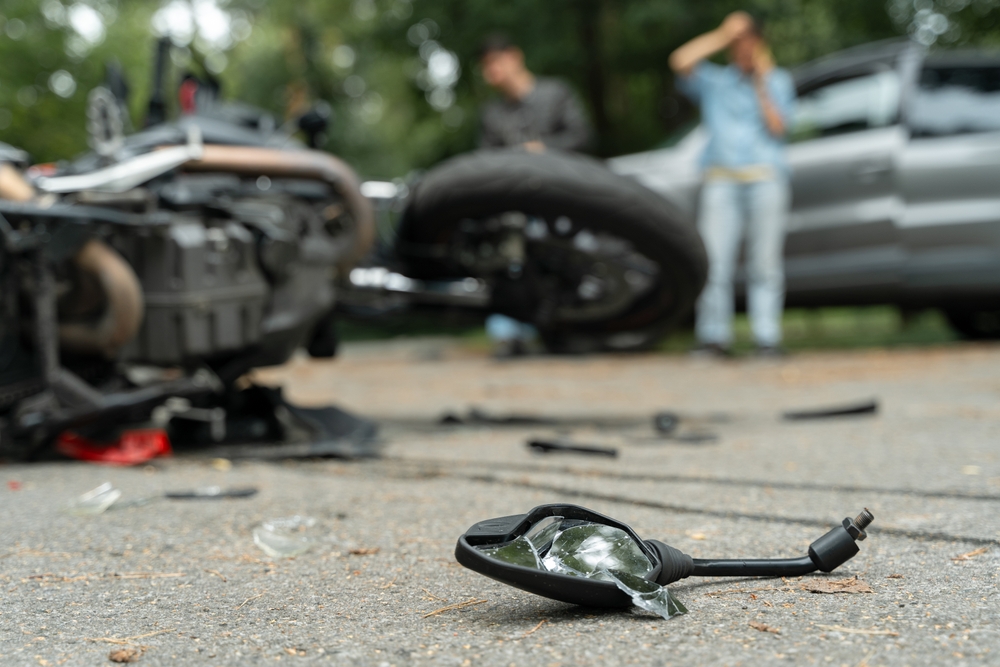
Fault is determined by reconstructing the collision and identifying which party violated traffic laws or failed to exercise reasonable care. Key factors include:
- Traffic violations: Did the other driver fail to yield, run a stop sign, change lanes unsafely, or follow too closely? Violations establish negligence and shift fault to the driver.
- Right of way: Motorcycles have the same right-of-way protections as cars. Drivers who turn left across your path, pull out from side streets, or merge into your lane without looking violate your right of way and bear primary responsibility.
- Visibility and reaction time: Drivers have a duty to look for motorcycles and adjust their behavior. Claiming that they didn’t see the motorcyclist is not a defense when the rider was visible and traveling lawfully.
- Road conditions and environment: Weather, lighting, and road hazards affect how courts assign fault. If the driver failed to adjust speed or following distance for conditions, their negligence may outweigh any rider conduct.
Accident reconstruction experts, if needed, can analyze skid marks, impact damage, and vehicle positions to determine speed, braking distance, and the sequence of events. Witness testimony and dashcam or traffic camera footage corroborate or contradict driver and rider accounts.
What Happens if the Insurance Company Says the Motorcycle Crash Was My Fault?
Insurance adjusters sometimes attempt to shift blame to motorcycle riders in an effort to reduce payouts. They might claim you were speeding, following too closely, weaving in traffic, or didn't give the driver enough time to see you. They might also point to your lane position, your clothing, or your decision to ride at night and argue you caused the collision. These are negotiation strategies designed to lower the settlement or deny the claim entirely.
A Marion motorcycle accident attorney investigates the facts, obtains witness statements and crash scene evidence, and challenges the insurer's version of events. Most motorcycle accidents in Southern Illinois are caused by driver negligence. Even if you share some of the blame, the driver's failure to follow traffic laws may still make them primarily responsible.
Can I Recover Damages if I Was Speeding, Lane Splitting, or Riding Aggressively?
Whether or not you can recover damages will depend on your percentage of blame, not necessarily the specific behaviors that contributed to the crash.
Speeding itself does not automatically bar recovery in Illinois. If you were traveling above the speed limit when the collision occurred, the insurer could argue that your speed contributed to the crash or made it harder for you to avoid the other vehicle. This may increase your fault percentage, but it does not necessarily eliminate your claim.
Lane splitting, riding between lanes of stopped or slow-moving traffic, is illegal in Illinois and constitutes negligence. If you were lane splitting when the collision occurred, you likely bear significant fault.
Aggressive riding, like excessive speed, weaving through traffic, and tailgating, also increases your percentage of responsibility. However, even illegal or aggressive conduct does not bar recovery if the other driver's actions were the primary cause.
Insurance adjusters seize on any rider conduct that violates traffic laws and argue you caused the crash. An accident lawyer examines the facts and builds a case that highlights the driver's negligence rather than letting the focus rest on your speed or lane position.
Should I Talk to the Insurance Company if I Might Be Partly to Blame?

No. Adjusters use recorded statements to lock you into admissions that increase your fault percentage. They ask leading questions, such as: "Were you speeding?" "Could you have braked sooner?" "Did you see the car before it turned?" and misinterpret your answers as concessions of responsibility. Even honest, well-meaning answers are twisted to support denial or low settlement offers.
Politely decline to give a recorded statement and refer the adjuster to your Marion motorcycle accident attorney. Your lawyer handles communication with insurers, protects you from saying things that hurt your claim, and presents evidence that shifts fault to the other driver without letting the insurer frame the narrative around your conduct.
FAQ for Motorcycle Accidents with Shared Fault in Illinois
How Does Being Partially at Fault Affect My Motorcycle Accident Settlement?
Your settlement is reduced by your percentage of fault. Insurance companies inflate your responsibility to lower what they pay, so your attorney's job is to minimize your fault percentage through evidence that highlights the other driver's violations and negligence.
What Happens if I Wasn't Wearing a Helmet in My Illinois Motorcycle Crash?
Illinois does not require adult riders to wear helmets, so riding without one is not negligence. However, insurance companies argue that not wearing a helmet worsened your head injuries and that your damages should be reduced. Your attorney presents medical testimony that separates the collision's cause from the severity of your injuries and fights adjusters who conflate the two to deny fair compensation.
Do I Need a Motorcycle Accident Lawyer if I Was Partly at Fault?
Yes, it may be advisable. Motorcycle accident claims involving shared fault require careful investigation, analysis, and aggressive negotiation. A motorcycle accident lawyer in Marion, IL gathers crash scene evidence, retains accident reconstruction experts, interviews witnesses, and builds a record that demonstrates the other driver's primary responsibility.
Contact Dihle Law Firm for Help with Your Motorcycle Accident Claim
Contact Dihle Law Firm for Help with Your Truck Accident Claim

If you were hurt in a motorcycle crash in Marion or Southern Illinois and the insurance company is blaming you to reduce their payout, early legal consultation protects your rights and preserves critical evidence.
Call (618) 326-5520 to schedule a consultation and discuss how we investigate fault, challenge insurer bias, and pursue fair compensation even when you share some responsibility for the collision.